Dolphin Watching in the Algarve: Your Complete Guide to Meeting Portugal's Wild Dolphins
There's something magical about seeing a wild dolphin break the surface just meters from your boat. The Algarve isn't just famous for its golden cliffs and hidden beaches — these waters are home to one of Europe's most accessible populations of wild dolphins, and watching them in their natural habitat is an experience that stays with you long after you've dried off.

We've been on countless dolphin watching trips along this coast over the years. Some mornings we've seen pods of over a hundred common dolphins racing alongside our boat, mothers teaching calves to surf the bow wave. Other days, we've watched bottlenose dolphins lazily cruising past the dramatic cliffs near Benagil. Every trip is different, and that's part of what makes it special.
This guide covers everything you need to know about dolphin watching in the Algarve — from which species you might encounter to where to book, what to bring, and how to maximize your chances of an unforgettable encounter.
Why the Algarve is Europe's Best Dolphin Watching Destination
The Algarve coastline sits at a remarkable intersection of marine environments. The continental shelf drops off relatively close to shore, creating upwellings of nutrient-rich water that attract vast quantities of fish. Where the fish go, the dolphins follow.
The Marine Environment
Several factors combine to make these waters particularly rich in marine life:
- The continental shelf edge lies just 20-30 kilometers offshore, bringing deep-water species unusually close to the coast
- Nutrient upwellings from the Atlantic create a food chain that supports everything from sardines to whales
- Year-round mild temperatures (15-23°C water temperature) mean dolphins don't need to migrate far
- Protected coastal areas including the Ria Formosa Natural Park provide important habitats
- Abundant fish populations including sardines, mackerel, and squid — the dolphins' primary food sources
The result is a coastline where dolphin sightings are remarkably consistent. During peak season, reputable tour operators report sighting success rates above 90%. Even in winter months, the resident populations remain active, though seas can be rougher.
What makes the Algarve special isn't just the quantity of dolphins — it's the quality of encounters. The relatively calm, clear waters allow for excellent visibility, and the dolphins here are accustomed to boats without being dependent on them. They're wild, free, and genuinely curious.
Dolphin Species You Can See in the Algarve
Three dolphin species are regularly spotted in Algarve waters, each with distinct characteristics and behaviors. Knowing what to look for adds another dimension to your experience.
Common Dolphin

The common dolphin (Delphinus delphis) is the species you're most likely to encounter, and arguably the most spectacular to watch. These are the acrobats of the dolphin world.
How to identify them:
- Distinctive hourglass pattern on their sides — yellow/tan toward the front, gray toward the tail
- Smaller than bottlenose dolphins (1.7-2.4 meters)
- Long, pointed beak
- Fast, energetic swimmers
What to expect:
Common dolphins travel in large pods, sometimes numbering over 100 individuals. They're incredibly social and often approach boats out of curiosity. Watch for them riding the bow wave — they seem to genuinely enjoy the game, taking turns surfing the pressure wave created by the boat's movement.
They're also impressive hunters. We've watched pods working together to corral fish into tight balls near the surface, taking turns diving through to feed while seabirds circle overhead hoping for scraps.
Best time to see them: Year-round, but larger pods are more common from April to October.
Bottlenose Dolphin
The bottlenose dolphin (Tursiops truncatus) is the dolphin most people picture when they hear the word — think Flipper. These are the gentle giants of Algarve waters.
How to identify them:
- Larger and more robust than common dolphins (2.5-4 meters)
- Uniform gray coloring, lighter on the belly
- Shorter, stubbier beak
- Prominent curved dorsal fin
What to expect:
Bottlenose dolphins travel in smaller groups, typically 5-30 individuals. They're more laid-back than their common cousins, often cruising slowly near the surface. What they lack in acrobatics, they make up for in personality — bottlenose dolphins are famously curious and will sometimes approach boats to investigate.
The Algarve has a resident population that stays close to shore year-round. Some individuals have been identified and tracked for decades, recognized by unique markings on their dorsal fins.
Best time to see them: Year-round, often spotted closer to shore than common dolphins.
Striped Dolphin
The striped dolphin (Stenella coeruleoalba) is less frequently seen but always exciting when it appears.
How to identify them:
- Distinctive dark stripe running from eye to flipper
- Blue-gray back with lighter sides
- Similar size to common dolphins
- Often found in deeper water
What to expect:
Striped dolphins prefer deeper, offshore waters, so sightings usually occur on longer tours or when conditions bring them closer to the shelf edge. They're athletic swimmers and can reach speeds of up to 25 km/h.
Best time to see them: More common in summer months when tours venture further offshore.
Other Marine Life You Might Encounter
Dolphins aren't the only marine life you might see. Depending on the season and your tour route, keep your eyes open for:
- Ocean sunfish (Mola mola) — These bizarre, disc-shaped fish are surprisingly common in late summer. They can weigh over 1,000 kg and often bask at the surface.
- Loggerhead sea turtles — The Algarve is an important habitat for these gentle creatures
- Pilot whales — Occasionally spotted, especially on longer tours from Sagres
- Orcas — Rare but not unheard of, particularly near the Strait of Gibraltar in spring
- Various seabirds — Gannets, shearwaters, and cormorants often indicate dolphin activity below
Best Time for Dolphin Watching in the Algarve
Dolphins live in Algarve waters year-round, but timing your trip right can significantly improve your experience.
Month-by-Month Guide
Peak Season: June to September
- Sighting success rate: 90-95%
- Sea conditions: Calmest waters, minimal cancellations
- Pod sizes: Largest, often 50-200+ dolphins
- Downside: Most crowded, book well in advance
This is prime time for dolphin watching. The Atlantic is at its calmest, visibility is excellent, and large pods of common dolphins are actively feeding close to shore. Tours run at full capacity, so booking several days ahead is essential, especially in August.
Shoulder Season: April-May and October
- Sighting success rate: 80-90%
- Sea conditions: Generally good, occasional rough days
- Pod sizes: Medium, typically 20-100 dolphins
- Upside: Fewer crowds, easier bookings, often better prices
Our favorite time to go. The dolphins are still plentiful, but you won't be sharing the experience with a dozen other boats. October can bring spectacular sunlight for photography, and spring brings the added bonus of newborn calves learning the ropes.
Off Season: November to March
- Sighting success rate: 60-75%
- Sea conditions: More variable, higher cancellation rates
- Pod sizes: Smaller resident groups
- Upside: Authentic experience, very few tourists
The dolphins don't leave — they're here year-round. But winter Atlantic swells mean more tour cancellations and potentially rougher conditions when you do go out. That said, a clear winter morning can be magical, with resident bottlenose pods often spotted close to shore.
Time of Day Considerations
Morning tours (8-10am start) are generally best for several reasons:
- Calmer seas before afternoon winds pick up
- Dolphins are often more active after overnight rest
- Better light for photography (sun behind you when facing the coast)
- Less crowded — many tourists sleep in on vacation
Afternoon tours (2-4pm start) can be excellent too:
- Warmer temperatures if you're sensitive to cold
- Sometimes catch dolphins during afternoon feeding
- Sunset tours available in summer
Sunset tours offer a different experience entirely — the light is spectacular, and there's something special about watching dolphins as the sun dips toward the horizon. Just know that sighting conditions may be slightly less optimal than morning trips.
Where to Book Your Dolphin Watching Tour
Tours depart from marinas across the Algarve coast, each with its own character and advantages. Here's our breakdown of the main departure points.
Lagos — Expert-Led Tours with Marine Biologists
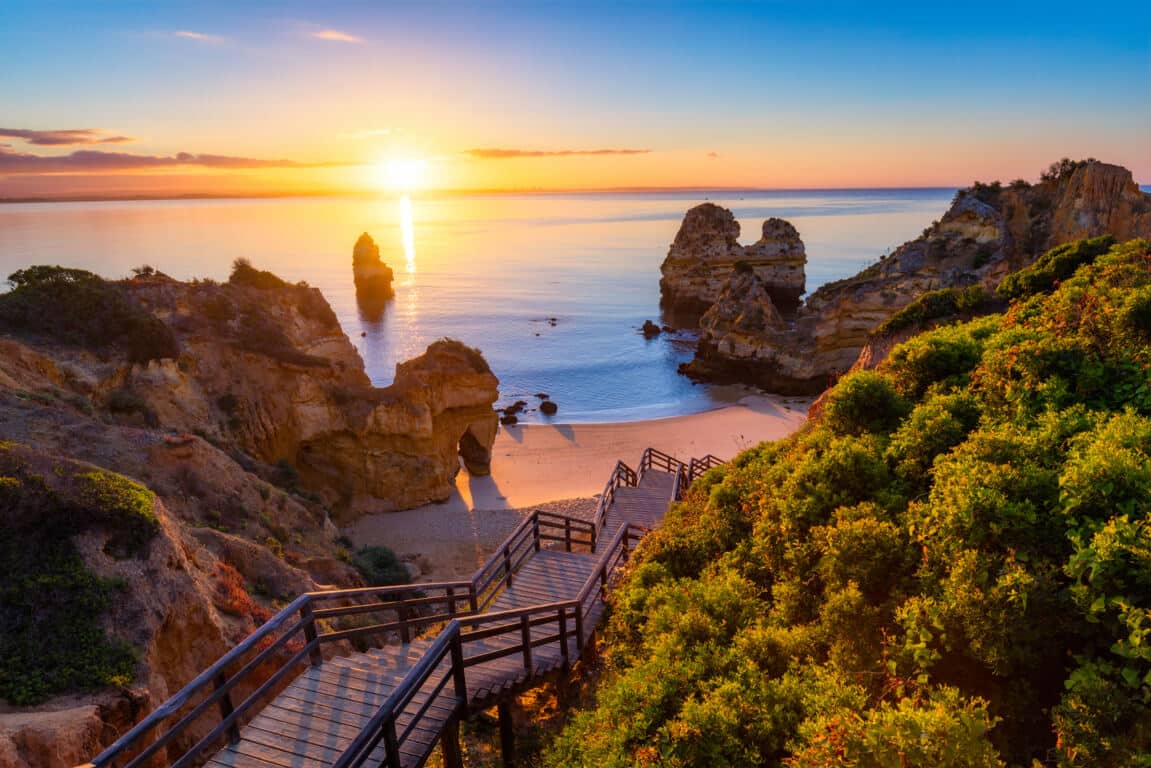
Lagos is our top recommendation for serious wildlife enthusiasts. The marina is well-organized, and several operators offer tours led by marine biologists who can explain dolphin behavior, identify individuals, and contribute to ongoing research.
Why choose Lagos:
- Tours led by professional marine biologists
- Excellent for combining with Ponta da Piedade cliff visits
- Smaller, more intimate boat options available
- Good restaurants and cafes around the marina for before/after
- Free parking relatively easy to find nearby
Typical tour details:
- Duration: 1.5-2.5 hours
- Price range: €35-55 per person
- Best for: Wildlife enthusiasts, photographers, educational experiences
The western Algarve waters near Lagos tend to have excellent dolphin activity, and the coastline from Lagos to Sagres is dramatic. You'll often spot dolphins against a backdrop of towering golden cliffs.
We recommend booking the Lagos Dolphin Watch Tour with Professional Marine Biologist — the educational component transforms a simple boat trip into a genuine learning experience.
Local tip:
Arrive 30 minutes early to grab a coffee at one of the marina cafes and watch the fishing boats come in.
Albufeira — The Family-Friendly Hub
Albufeira is the Algarve's tourism capital, and its marina offers the widest selection of dolphin watching options. This is the place for families and those who want convenience.
Why choose Albufeira:
- Most tour options and departure times
- Large, stable catamarans ideal for families
- Easy to combine with Benagil Cave visits
- Central location — easy to reach from anywhere in the Algarve
- Plenty of restaurants, shops, and amenities at the marina
Typical tour details:
- Duration: 2-3 hours
- Price range: €30-50 per person
- Best for: Families with children, first-time visitors, those prone to seasickness
The Albufeira marina (Marina de Albufeira) is modern and well-equipped. Many operators here use larger catamarans, which are more stable and have better facilities — important if you're traveling with young children or anyone worried about motion sickness.
We recommend the Albufeira Dolphin Watching and Benagil Cave Boat Cruise — it combines dolphin watching with a visit to the famous Benagil Cave, giving you two bucket-list experiences in one trip.
Local tip:
The marina is about 4km from Albufeira old town. There's parking at the marina, but it fills up in summer — arrive early or take a taxi.
Vilamoura — The Luxury Marina Experience
If you want to combine dolphin watching with upscale surroundings, Vilamoura is your port. The marina is lined with superyachts, high-end restaurants, and designer boutiques.
Why choose Vilamoura:
- Stunning marina setting
- Premium boat options
- Excellent restaurants for a pre/post-tour meal
- Good combination with golf trips
- Generally less crowded than Albufeira
Typical tour details:
- Duration: 2-2.5 hours
- Price range: €35-60 per person
- Best for: Couples, those staying in central Algarve, luxury travelers
The Vilamoura marina is one of Europe's largest, and there's something special about departing from between rows of gleaming yachts. The central location also makes it a good choice if you're staying anywhere between Lagos and Faro.
Check out the Vilamoura Benagil Caves Boat Tour — while marketed as a cave tour, dolphins are frequently spotted along the route.
Local tip:
Book a table at one of the marina restaurants for lunch after your morning tour. The seafood is excellent, and watching the boats come and go is entertainment in itself.
Portimao — Combining Dolphins and Benagil
Portimao offers a perfect middle ground — close to the famous caves and cliffs, with operators offering excellent combination tours.
Why choose Portimao:
- Closest departure point to Benagil Cave
- Good value combination tours
- Less touristy atmosphere than Albufeira
- Excellent seafood restaurants nearby
- Easy parking at the marina
Typical tour details:
- Duration: 2-3 hours
- Price range: €30-45 per person
- Best for: Those wanting the best of both worlds — dolphins and caves
The Portimao marina sits at the mouth of the Arade River, and tours heading east along the coast pass some of the Algarve's most spectacular scenery. The combination of dolphin watching with Benagil and surrounding caves makes for a packed, memorable morning.
We recommend the Portimao Benagil Caves Cruise with Dolphin Watching — this is the most popular combo tour, and for good reason.
Local tip:
After your tour, walk along the riverfront to the old fishing quarter for some of the best grilled sardines in the Algarve.
Sagres — Wild Atlantic Adventures (Whales Too!)
Sagres sits at the southwestern tip of Europe, where the Atlantic meets the Mediterranean current. This is wild, dramatic Portugal — and the best place in the Algarve for spotting larger marine mammals.

Why choose Sagres:
- Best chance of seeing whales (pilot whales, occasionally orcas)
- Most dramatic coastal scenery
- Fewer tourists, more authentic atmosphere
- Wildlife-focused operators with research connections
- Can be combined with visiting Cape St. Vincent
Typical tour details:
- Duration: 2-3 hours
- Price range: €50-70 per person
- Best for: Serious wildlife enthusiasts, those hoping to see whales, adventure seekers
The waters around Sagres are deeper and more exposed than elsewhere in the Algarve. This brings larger species closer to shore — pilot whales are spotted regularly, and there are even occasional orca sightings (particularly in spring). The trade-off is that conditions can be rougher and tours cancelled more frequently.
The Sagres Wildlife Adventure — Dolphin and Whale Watching Tour is run by operators with genuine wildlife expertise. If you're hoping to see something beyond dolphins, this is your best bet.
Local tip:
Combine your dolphin trip with a visit to the Fortaleza de Sagres and Cape St. Vincent for a full day exploring Europe's southwestern corner.
Faro — Eastern Algarve Gateway
Faro is the Algarve's capital and gateway to the eastern coast. Dolphin tours here often include the unique ecosystem of the Ria Formosa Natural Park.
Why choose Faro:
- Closest option if flying into Faro Airport
- Access to Ria Formosa lagoon ecosystem
- Different species mix due to lagoon proximity
- Less crowded than western Algarve
- Good for combining with Ria Formosa island visits
Typical tour details:
- Duration: 1.5-2 hours
- Price range: €40-55 per person
- Best for: Those based in eastern Algarve, birdwatchers, Ria Formosa visitors
The Ria Formosa is a protected lagoon system stretching along the eastern Algarve coast. Dolphin tours from Faro often spot bottlenose dolphins that frequent the lagoon entrance, where fish congregate. It's a different experience from the dramatic cliff-backed waters of the western coast.
Try the Faro Dolphin Watching Boat Tour for an eastern Algarve perspective on dolphin watching.
Local tip:
Combine your dolphin tour with a trip to one of the Ria Formosa's barrier islands — Ilha Deserta or Ilha de Faro — for some of the Algarve's most pristine beaches.
Types of Dolphin Watching Tours
Not all dolphin tours are created equal. Understanding the different boat types and tour formats will help you choose the right experience.
Catamaran Tours — The Comfortable Choice
Large sailing catamarans are the most common vessels for Algarve dolphin tours, especially from Albufeira and Vilamoura.
What to expect:
- Capacity: 40-80 passengers
- Duration: 2-3 hours
- Spacious decks with seating areas
- Onboard bar and toilet facilities
- Stable platform — good for those worried about seasickness
Pros:
- Most comfortable option
- Good for families with young children
- Space to move around
- Shade available
- Usually includes a drink
Cons:
- Less intimate experience
- Can feel crowded in peak season
- Harder to get close-up photos
- Fixed itineraries
Best for:
Families, older visitors, anyone prone to motion sickness, those wanting a relaxed experience.
Speedboat/RIB Tours — The Thrilling Option
Rigid inflatable boats (RIBs) and speedboats offer a more dynamic experience, getting you closer to the action.
What to expect:
- Capacity: 8-20 passengers
- Duration: 1.5-2 hours
- Fast, responsive vessels
- More adventurous atmosphere
- Better maneuverability for approaching dolphins
Pros:
- Closer encounters with dolphins
- More exciting, dynamic experience
- Smaller groups
- Better photo opportunities
- Captains can respond quickly to sightings
Cons:
- Rougher ride, not ideal for those prone to seasickness
- Less shade and no facilities
- Can feel exposed in choppy conditions
- Usually more expensive
Best for:
Adventure seekers, photographers, those who want a more intimate experience, smaller groups.
Private Charter Tours
For special occasions or those who value privacy, private charters offer an exclusive experience.
What to expect:
- Capacity: 2-12 passengers (your group only)
- Duration: Flexible, typically 2-4 hours
- Choice of boat type
- Customizable itinerary
- Dedicated captain and sometimes guide
Pros:
- Complete privacy
- Flexible timing and route
- Can combine activities (swimming, snorkeling, cave visits)
- Perfect for celebrations or proposals
- Undivided attention from crew
Cons:
- Significantly more expensive (€250-500+)
- Need to organize your own group
- May need to book further in advance
Best for:
Special occasions, families wanting privacy, photographers, honeymooners, groups of friends.
Combo Tours: Dolphins + Caves
The most popular format in the Algarve combines dolphin watching with visiting the famous sea caves, particularly Benagil.
What to expect:
- Duration: 2.5-4 hours
- Visit dramatic coastline and caves
- Dolphin watching along the route
- Usually includes Benagil Cave viewing from the water
- Often other stops like Praia da Marinha
Pros:
- Excellent value — two experiences in one
- See the best of Algarve's coast
- Good use of limited vacation time
- Usually the most scenic routes
Cons:
- Less time dedicated purely to dolphins
- Fixed itinerary
- Longer time on the water
Best for:
First-time visitors, those with limited time, anyone wanting a comprehensive coastal experience.
Dolphin Watching Tour Comparison
Here's our quick guide to choosing the right tour for you:
Lagos Dolphin Watch with Marine Biologist — Best for Wildlife Enthusiasts
- Price: From €40 | Duration: ~2 hours | Departure: Lagos Marina
- Highlights: Expert marine biologist guide, educational focus, research contribution
- Best for: Those who want to learn, not just see
Albufeira Dolphins + Benagil Combo — Best for Families
- Price: From €35 | Duration: ~2.5 hours | Departure: Albufeira Marina
- Highlights: Stable catamaran, cave visit included, central location
- Best for: Families, first-time visitors, those wanting value
Portimao Caves + Dolphins Cruise — Best Value Combo
- Price: From €30 | Duration: ~2 hours | Departure: Portimao Marina
- Highlights: Closest to Benagil, good prices, dolphins + caves
- Best for: Budget-conscious travelers, cave enthusiasts
Sagres Wildlife Adventure — Best for Whale Watching
- Price: From €50 | Duration: ~2.5 hours | Departure: Sagres Harbor
- Highlights: Whale watching potential, dramatic coastline, wildlife experts
- Best for: Serious wildlife enthusiasts, those hoping for whale sightings
Faro Dolphin Tour — Best for Eastern Algarve
- Price: From €45 | Duration: ~1.5 hours | Departure: Faro
- Highlights: Ria Formosa access, different ecosystem, less crowded
- Best for: Those staying in eastern Algarve, birdwatchers
Want to browse all available options? See all dolphin watching tours in the Algarve.
What to Expect on Your Dolphin Tour
Knowing what to expect helps you prepare and makes the experience more enjoyable.
Before You Board
Arrival: Plan to arrive at the marina 20-30 minutes before your scheduled departure. This gives time to find the meeting point, use the facilities, and complete any paperwork.
Check-in: Most operators have a small kiosk or office at the marina. You'll confirm your booking and receive any last-minute instructions. Some tours provide a brief safety and wildlife briefing on the dock.
Boarding: You'll board the vessel and choose your position. For the best dolphin-watching spots, head to the front (bow) of the boat or the sides. The back (stern) is usually better for those worried about seasickness.
During the Tour
Departure: Tours typically head out to open water first, sometimes passing through dramatic coastal scenery. Captains know the local waters intimately and head toward areas where dolphins have been recently spotted.
Searching: The crew scans the water for signs of dolphin activity — disturbed water, bird activity, or fins breaking the surface. Modern boats often communicate with each other to share sightings.
The encounter: When dolphins are spotted, the boat approaches slowly and respectfully. Good operators follow strict codes of conduct — no chasing, no surrounding, no interfering with natural behavior. The dolphins decide if they want to interact.
What happens varies: Some days, curious dolphins approach the boat and ride the bow wave for extended periods. Other times, they're busy feeding and largely ignore boats. Either way, watching wild dolphins go about their lives is special.
Return: Most tours loop back along the coast, often passing sea caves, dramatic cliffs, or beaches. Keep watching — we've had some of our best sightings on the return leg.
Photography Tips
Getting good dolphin photos from a moving boat isn't easy, but these tips help:
- Use burst mode — dolphins surface unpredictably; firing multiple frames increases your chances
- Keep your camera ready — action happens fast
- Use a fast shutter speed — at least 1/1000s to freeze motion
- Protect your gear — salt spray is brutal on electronics; bring a waterproof bag
- Don't just shoot — spend time watching with your own eyes too
- Phone cameras work — modern smartphones handle action surprisingly well
- Polarizing filter — reduces glare if using a proper camera
The best photos often come from patience and preparation rather than expensive equipment.
What to Bring on a Dolphin Watching Trip
A well-packed bag makes the difference between a comfortable trip and a miserable one.
Essential items:
- Sunscreen — high SPF, applied before boarding (it's hard to apply properly on a moving boat)
- Sunglasses — polarized lenses reduce glare and help you spot dolphins
- Hat — especially on boats without shade
- Light jacket or windbreaker — even in summer, the ocean breeze can be chilly
- Water bottle — staying hydrated prevents seasickness
- Camera or phone — with strap or secured pocket
- Motion sickness medication — if you're prone, take it 30-60 minutes before departure
Nice to have:
- Binoculars — help spot distant dolphins and appreciate detail
- Waterproof phone pouch — protects against spray and drops
- Snacks — some tours are longer than expected
- Cash — for tips if you want to thank the crew
- Change of clothes — in the car for afterward if you get wet
What to leave behind:
- Valuables you're worried about losing
- Heavy bags — space is limited
- High heels or impractical shoes — wear flat, grippy footwear
Tips for the Best Dolphin Sightings
After years of dolphin watching in the Algarve, we've learned a few things that genuinely improve your chances.
Book a morning tour
The first departure of the day typically has the calmest seas and most active dolphins. Afternoon winds in the Algarve (the nortada) can pick up significantly, making conditions less ideal.
Choose a smaller boat
Smaller vessels can get closer to the action and maneuver more responsively when dolphins are spotted. They also tend to have smaller groups, meaning better viewing positions for everyone.
Be patient
Wildlife watching requires patience. Sometimes dolphins appear within minutes; sometimes it takes half an hour or more. The anticipation is part of the experience.
Watch for bird activity
Seabirds diving often indicate fish schools below — and where there are fish, dolphins often follow. Point out any bird activity to your captain.
Trust your captain
Local skippers have spent years learning these waters. They know where dolphins tend to gather based on season, tide, and conditions. If they're heading to a particular spot, there's usually a good reason.
Manage expectations
Even in peak season, not every trip produces spectacular encounters. Some days, dolphins are distant or uninterested. This is wildlife, not a zoo — that's what makes the good encounters truly special.
Consider the shoulder season
April-May and September-October often provide excellent sightings with fewer boats on the water. Dolphins seem more relaxed when there's less boat traffic.
Scan the horizon
Don't just watch directly beside the boat. Dolphins can appear anywhere, and often the first sign is a distant splash or fin on the horizon.
Responsible Dolphin Watching: What You Should Know
Not all dolphin watching is equal. How tours are conducted matters — both for the dolphins' welfare and for the long-term sustainability of this activity.
Ethical Tour Operators
Responsible operators follow established codes of conduct:
- Approach slowly — never chase dolphins or cut across their path
- Maintain distance — typically 50-100 meters unless dolphins choose to approach
- Limit encounter time — don't harass a single pod for extended periods
- No feeding — wild dolphins should never associate boats with food
- Reduce speed — slow, predictable movements are less stressful for wildlife
- Single boat rule — good operators coordinate to avoid multiple boats surrounding a pod
When booking, look for operators who explicitly mention responsible wildlife watching practices. Member organizations like the Algarve Dolphin Research Initiative work with tour companies to promote ethical standards.
The Rules That Protect Dolphins
Portugal has legal protections for marine mammals:
- Deliberately disturbing, pursuing, or harassing cetaceans is illegal
- Commercial operators need licenses and must follow specific guidelines
- There are designated marine protected areas with additional restrictions
These regulations exist because unchecked tourism can negatively impact dolphin populations — changing their behavior, increasing stress, and disrupting feeding and nursing. By choosing responsible operators, you're supporting the kind of tourism that can coexist with healthy dolphin populations.
How you can help:
- Choose licensed, reputable operators
- Don't pressure captains to get closer than is appropriate
- Avoid tours that promise guaranteed contact or feeding
- Report any concerning behavior you witness to local authorities
- Consider supporting marine research organizations
Frequently Asked Questions
What dolphins can you see in the Algarve?
Three species are regularly spotted: common dolphins (the most frequently seen, often in large pods), bottlenose dolphins (the classic "Flipper" dolphins, resident year-round), and striped dolphins (less common, found in deeper water). Occasionally, pilot whales and very rarely orcas are spotted, particularly near Sagres.
When is the best time for dolphin watching in the Algarve?
June through September offers the highest sighting rates (90%+), calmest seas, and largest pods. However, April-May and October are excellent with fewer crowds. Dolphins are present year-round, but winter seas can be rougher with higher tour cancellation rates. Morning tours typically offer better conditions than afternoon.
How much does dolphin watching cost in the Algarve?
Prices range from €25-70 per person depending on location, boat type, and tour length. Standard catamaran tours average €30-45. Expert-led tours and specialty wildlife tours cost €45-70. Private charters start around €250 for small groups. Combination tours (dolphins + caves) often provide the best value.
What are the chances of seeing dolphins?
Reputable operators report 85-95% sighting success in peak season (June-September) and 70-85% in shoulder seasons. Sightings can never be guaranteed with wild animals, but the Algarve's healthy dolphin population makes encounters highly likely. Some operators offer partial refunds or free rebooking if no dolphins are spotted.
Can you swim with dolphins in the Algarve?
No — and you shouldn't want to. Swimming with wild dolphins is illegal in Portuguese waters and harmful to the animals. Dolphins here are truly wild, not habituated to human contact. The best experiences come from observing their natural behavior from a respectful distance. Programs elsewhere offering dolphin swimming often involve captive or semi-captive animals.
Is dolphin watching safe for children?
Yes, most tours welcome children. Catamaran tours from Albufeira are particularly family-friendly, with stable platforms, shade, and onboard facilities. Most operators set minimum ages of 3-5 years for standard tours. Speedboat/RIB tours may have higher age limits (6-8 years) due to the more dynamic conditions. Always bring sun protection and motion sickness prevention for young children.
What happens if I get seasick?
Motion sickness is common, but manageable. Take medication (Dramamine or similar) 30-60 minutes before departure. Choose a larger catamaran over a speedboat. Sit near the middle of the boat where motion is least. Focus on the horizon rather than looking down. Stay on deck in fresh air. Avoid heavy meals before boarding. Ginger tablets or bands can help some people. If prone to severe motion sickness, consider a shorter tour.
Should I book in advance?
Yes, especially in high season (June-August). Popular tours can sell out days in advance, particularly morning departures and smaller-group options. Booking 3-7 days ahead is recommended in summer. Shoulder seasons are more flexible, but booking at least a day ahead ensures availability. Online booking also typically offers better prices than walk-up rates.
What is the best town for dolphin watching tours?
It depends on what you want. Lagos offers expert-led tours with marine biologists. Albufeira has the most options and best family facilities. Portimao gives the best access to Benagil Cave combos. Sagres is best for whale watching potential. Vilamoura offers an upscale marina experience. Faro is ideal for eastern Algarve visitors and Ria Formosa access.
Are dolphins in the Algarve all year round?
Yes. The Algarve has resident bottlenose dolphin populations that stay year-round. Common dolphins are present throughout the year but are more abundant and form larger pods in warmer months (April-October). Winter dolphin watching is possible but weather-dependent, with more tour cancellations due to rough seas.
Experience the Real Algarve
Watching wild dolphins off the Algarve coast is one of those experiences that reminds you why travel matters. There's no filter, no script — just you, the Atlantic, and one of nature's most charismatic creatures going about its day.
Whether you choose a educational tour from Lagos, a family-friendly catamaran from Albufeira, or a wild Atlantic adventure from Sagres, you're in for something special. The dolphins here have been entertaining visitors for generations, and with responsible tourism, they'll continue doing so for generations to come.
Ready to plan your trip? Browse available dolphin watching tours across the Algarve and start your adventure.
Your local friend in the Algarve is just one email away.