Lagos Portugal First Time Visitor Guide: 15 Essential Tips You Need to Know
Lagos is one of the most beautiful coastal towns in Portugal, and there's a reason it tops so many Algarve itineraries. With its dramatic cliff-framed beaches, winding cobblestone streets, and a history that stretches back to the Age of Exploration, Lagos offers everything a first-time visitor could want from a Portuguese coastal holiday.
After years of living in the western Algarve, we've helped countless friends and family navigate their first Lagos trip. This guide shares everything we wish we'd known before our first visit — the practical details that guidebooks skip over and the local insights that transform a good trip into an unforgettable one.
Here are 15 essential tips that will help you make the most of your first time in Lagos.
What Makes Lagos Special
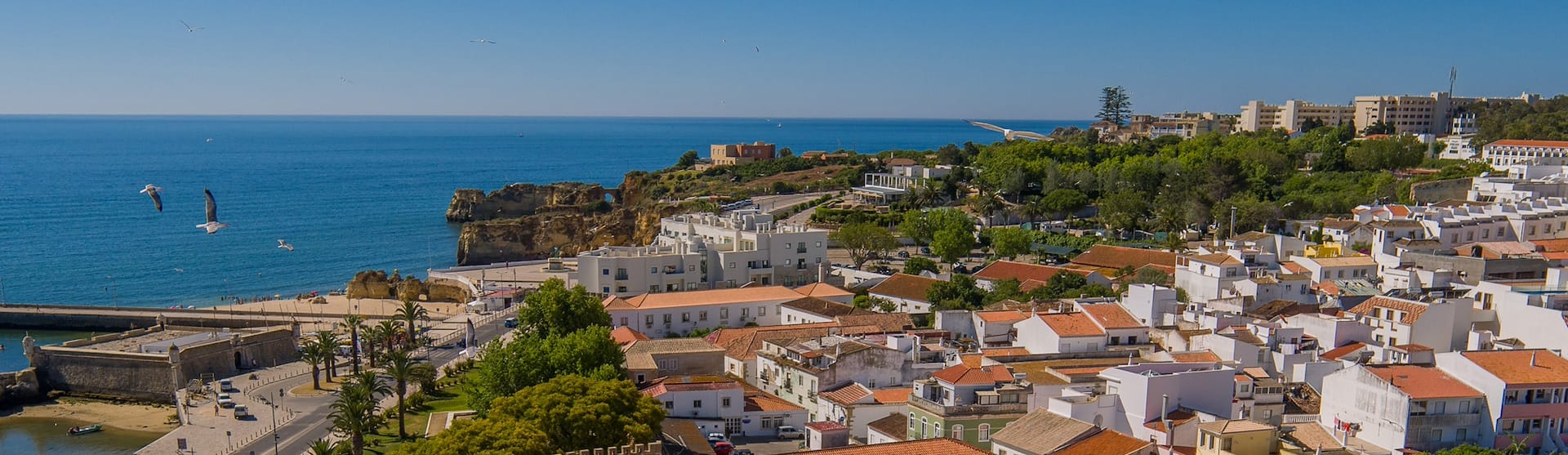
Lagos sits on the western Algarve coast, where golden cliffs plunge into turquoise waters and narrow streets wind through a town that's been welcoming travelers for over 2,000 years. The Phoenicians traded here, the Romans built here, and in the 15th century, Lagos became the launching point for Portugal's maritime exploration.
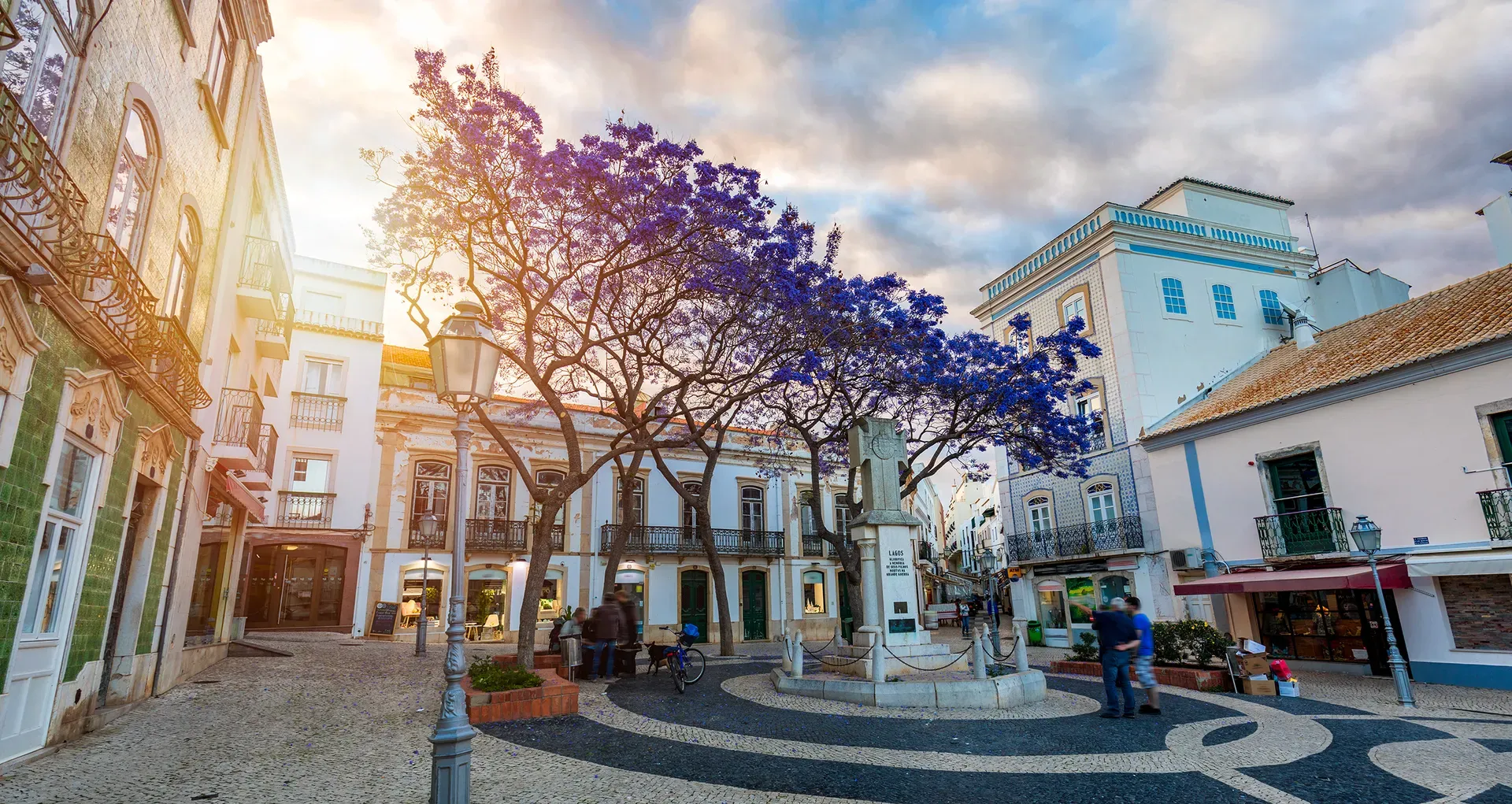
Today, Lagos balances its historical significance with a relaxed beach-town vibe. The old town remains remarkably authentic — locals still live here, traditional restaurants serve fresh fish to Portuguese families, and the Saturday market draws crowds from villages throughout the region.
What makes Lagos perfect for first-time visitors is its accessibility. Unlike some Algarve destinations that require a car for everything, Lagos is wonderfully walkable. The old town, marina, and several beaches are all within a 20-minute stroll. Yet it's also perfectly positioned for day trips to dramatic capes, hidden beaches, and mountain villages.
15 Essential Tips for First-Time Visitors
1. Best Time to Visit
The Algarve enjoys over 300 days of sunshine per year, but timing your visit matters more than you might think.
May through June and September through October are ideal. The weather is warm and sunny (25-28°C), the Atlantic is swimmable, and crowds are manageable. Prices drop noticeably outside July-August, and you'll find it easier to book restaurants and tours.
July and August bring peak summer. Beaches are busy, accommodation prices double, and popular restaurants require reservations days in advance. If these are your only options, they're still wonderful — just book early and arrive at beaches before 10am.
Winter (November through March) surprises many visitors. Daytime temperatures hover around 15-18°C — perfect for hiking the coastal trails without breaking a sweat. The old town feels authentically local, restaurant staff have time to chat, and accommodation costs drop by 60-70%. Swimming is possible on warmer days, though the water is brisk.
Local tip: The last two weeks of September offer our favorite weather of the year — summer temperatures, calm seas, and dramatically fewer crowds.
2. How to Get There
Most visitors fly into Faro Airport (FAO), the Algarve's main international airport. Lagos is approximately 90 kilometers west of Faro, reachable by several options.
Airport Transfers
The most comfortable option is a pre-booked transfer. You'll walk out of arrivals to find a driver waiting with your name, and be in Lagos in about an hour.
- Private Transfer (up to 4 passengers) — Direct door-to-door service
- Shared Transfer to Lagos — Budget-friendly option with other passengers
- Browse all Faro to Lagos transfers
By Train or Bus
From Faro, regional trains run to Lagos (approximately 2 hours, €8-10) with scenic coastal views. Buses (Rede Expressos or Eva) take about 1.5 hours. From Lisbon, direct buses to Lagos take approximately 4 hours.
Renting a Car
If you plan to explore beaches and day trips beyond Lagos, a rental car opens up the western Algarve magnificently. Rent at Faro Airport for the best selection. Driving in Portugal is straightforward, though be aware that the A22 motorway has electronic tolls — ask your rental company about a Via Verde device.
Local tip: For a pure Lagos beach holiday, you don't need a car. For exploring the Costa Vicentina, Sagres, and hidden beaches, a car transforms your options.
3. Where to Stay
Lagos has three main areas, each with different personalities.
Old Town (Centro Histórico) — Best for first-timers
Stay here if you want to step outside and immediately be surrounded by cobblestone streets, traditional restaurants, and the heart of Lagos. Everything is walkable — beaches, bars, restaurants, and the marina. Accommodation ranges from historic guesthouses to boutique hotels. The trade-off: some streets can be lively in summer evenings.
Marina Area — Modern convenience
The marina offers modern apartments with water views, easy parking, and a more resort-like feel. You're a 10-minute walk to the old town and close to Meia Praia beach. Better for families or those who prefer newer accommodation.
Meia Praia Beach — Relaxed beach vibes
Accommodation along the 4-kilometer Meia Praia beach suits those who prioritize sand over sightseeing. You'll need to walk or drive to the old town, but you're steps from one of the Algarve's best family beaches.
Booking advice: In summer (June-August), book accommodation at least 6-8 weeks ahead. Popular places sell out months in advance. Outside peak season, you'll have much more choice — last-minute deals are common.
4. Getting Around Lagos
One of Lagos's great virtues is its walkability. The old town is compact, and even the famous cliff beaches of Dona Ana and Camilo are reachable on foot (though the return uphill can be warm in summer).
Walking
From the old town center, key distances:
- Marina: 5 minutes
- Praia Dona Ana: 20 minutes
- Praia do Camilo: 25 minutes
- Ponta da Piedade: 30 minutes
- Meia Praia: 15-20 minutes (or 5-minute drive)
Taxis and Ride-hailing
Uber and Bolt operate in Lagos. In summer, demand can exceed supply during peak hours — request your ride 10-15 minutes before you need it. Local taxis are readily available at the marina and main squares.
Rental Cars and Parking
If you've rented a car, note that parking in the old town is limited and mostly paid (€1-2/hour). Larger free/cheaper lots exist near the marina and outside the old walls. Don't park in loading zones — tickets are enforced.
Trains
The Lagos train station connects to the eastern Algarve. Useful for day trips to Silves, Portimão, or Faro if you prefer not to drive.
5. The Beaches You Can't Miss
Lagos is famous for its beaches, and they deliver. Here are the essentials.
Praia Dona Ana — The postcard beach
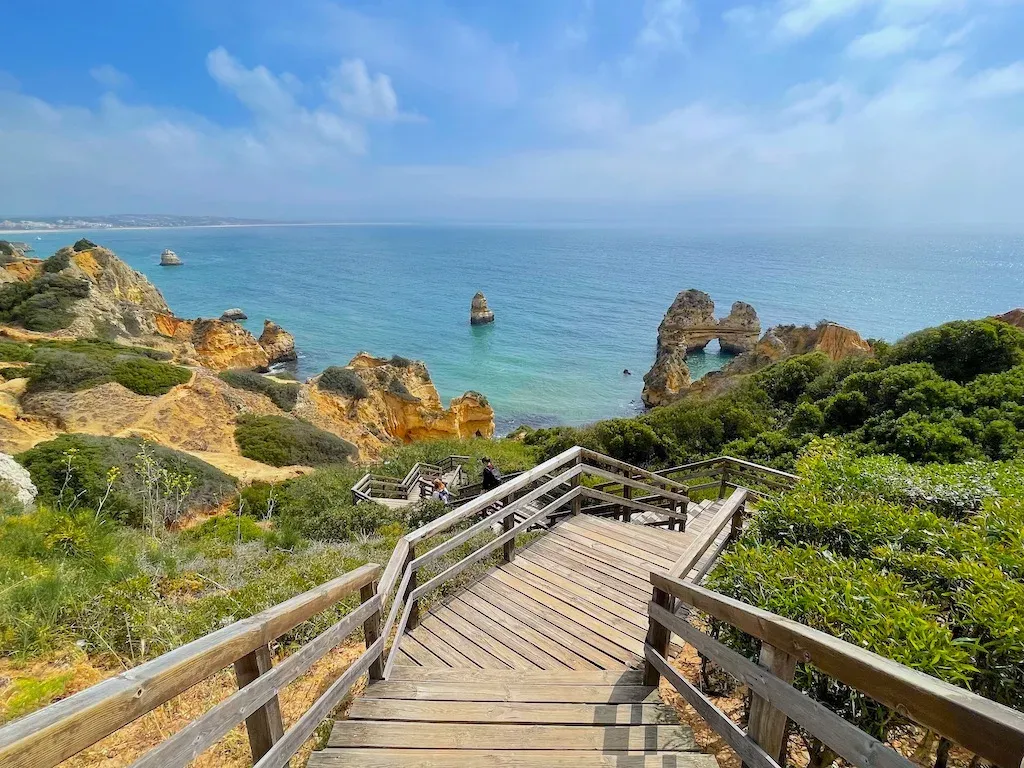
Lagos's most photographed beach, framed by golden cliffs and accessible via a wooden staircase. Stunning, but popular — arrive before 10am in summer for a spot. Facilities include toilets, beach bars, and rentals.
Praia do Camilo — Instagram's favorite
Two small coves reached by a dramatic wooden staircase of 200 steps. Incredibly photogenic but tiny — space is limited and fills quickly. Best for photos and quick swims rather than full beach days.
Meia Praia — Space to spread out
Lagos's longest beach stretches 4 kilometers along a sandbar. You'll always find room here, even in August. Calm, shallow water makes it ideal for families. Beach bars and restaurants dot the shoreline. Accessible by car, the small train from Lagos, or a 20-minute walk from the marina.
Ponta da Piedade — Cliffs, not swimming
This dramatic headland of sea stacks and grottos isn't a beach — it's a cliff-top viewpoint and boat tour departure point. The formations are extraordinary. Come for photos and perhaps a kayak tour through the caves, but don't plan to swim here.
Tide timing tip: Many Lagos beaches shrink significantly at high tide. Check tide times and plan beach visits for low to mid-tide for the best experience. Praia do Camilo particularly disappears at high water.
For more off-the-beaten-path options, see our guide to secret beaches near Lagos.
6. Old Town Essentials
The old town of Lagos deserves more than a quick walk-through. Give it at least half a day to properly explore.
City Walls
The 16th-century walls still encircle much of the old town. You can walk sections of them for elevated views over the rooftops to the sea.
Igreja de Santo António
One of the Algarve's finest Baroque churches, its interior drips with gilded woodwork. Modest entrance fee, but worth it for the craftsmanship.
Slave Market Museum (Mercado de Escravos)
Lagos was the first slave market in Europe, and this small museum handles the difficult history with dignity. It's sobering but important context for understanding the town's history.
Praça Gil Eanes
The main square, centered on a peculiar statue of Dom Sebastião, is the natural gathering point of the old town. Cafés ring the square — good for people-watching, if not the best coffee.
The Marina
The modern marina contrasts with the old town's ancient atmosphere. It's pleasant for an evening stroll, with restaurants, bars, and views of the bridge to Meia Praia.
Local tip: Get lost. The old town rewards wandering — turn down narrow alleys, peek into churches, find the quiet squares that don't appear on maps.
7. Dining Tips
Portuguese food in Lagos ranges from exceptional to tourist-trap. Here's how to eat well.
Couvert is not a scam
When you sit down at a Portuguese restaurant, the waiter will bring bread, butter, olives, and sometimes cheese or sardine pâté. This is called couvert, and it's not free — typically €2-5 total. You can wave it away if you don't want it, but it's not a trick, just a local custom. The charge will appear on your bill.
Fresh fish is the specialty
Lagos sits beside one of Portugal's best fishing grounds. Order fresh fish simply grilled (peixe grelhado), and let the waiter recommend what came in that morning. Sea bass (robalo), sea bream (dourada), and sardines (sardinhas, in season June-August) are reliable choices.
Visit the fish market
Mercado Municipal opens every morning except Sundays. Even if you're not cooking, the displays of fresh catch are impressive. The market also has a food court area for quick, authentic meals.
Book ahead in summer
From June through August, popular restaurants fill up. Make reservations for dinner, especially on weekends. Even casual places can have waits.
Avoid obvious tourist traps
Menus in five languages, photos of food, and aggressive touts are warning signs. Walk a few streets away from the main squares, and quality improves while prices drop.
Local tip: Lunch is often better value than dinner. Portuguese workers take lunch seriously — the prato do dia (dish of the day) at local spots offers excellent food at half the evening price.
8. Money and Paying
Portugal uses the euro. Here's what to expect.
Card payments are widely accepted. Even small restaurants and beach bars typically take Visa and Mastercard. Contactless is common.
Cash is still useful for:
- Street parking meters (some accept only coins)
- Small vendors at markets
- Tipping
- Very small purchases
ATMs (Multibancos) are plentiful in the old town and marina.
Tipping is not mandatory in Portugal. Service is included in menu prices. Leaving small change or rounding up is appreciated but not expected. For exceptional service, 5-10% is generous.
9. Language Basics
English is widely spoken in Lagos, particularly in tourist areas, restaurants, and hotels. You'll have no trouble getting by with English only.
That said, a few Portuguese phrases go a long way:
- Bom dia — Good morning (used until noon)
- Boa tarde — Good afternoon
- Obrigado/Obrigada — Thank you (male/female speaker)
- Por favor — Please
- A conta, por favor — The bill, please
- Uma cerveja — A beer
Locals appreciate even the smallest effort. A simple "obrigado" instead of "thank you" consistently earns warmer smiles.
10. What to Pack
Lagos's cobblestones and cliffs demand appropriate footwear and preparation.
Comfortable walking shoes — This is non-negotiable. The old town's cobblestones are charming but unforgiving. Flip-flops are fine for beaches, but proper shoes are essential for exploring.
Layers for evening — Evenings can cool down, especially by the water or if you're dining outside. A light jacket or cardigan covers you.
Sun protection — The Algarve sun is strong. Bring:
- High SPF sunscreen
- Sunglasses
- A hat for beach days and cliff walks
Waterproof phone case — If you plan to kayak, boat tour, or spend time on the water, protect your phone. The Ponta da Piedade grottos and cliff beaches are infinitely more enjoyable when you can photograph them worry-free.
Beach essentials — Quick-dry towel, water shoes for rocky areas, and a beach bag that can handle sand.
11. How Long to Stay
Lagos rewards longer stays, but even short visits are worthwhile.
2 days (minimum) — Enough time to explore the old town, visit two or three beaches, and get a taste of Lagos's character. You'll feel rushed, but you'll see the highlights.
4-5 days (ideal) — Our sweet spot recommendation. Time for beaches, old town exploration, a day trip or two (Sagres is essential), boat/kayak tours, and leisurely meals without feeling hurried.
1 week — Perfect for the full experience. Visit every beach, explore the Costa Vicentina, day trip to Silves and Monchique, take a boat tour, and still have lazy beach days without an agenda.
As a day trip — Possible from other Algarve bases, but not ideal. Lagos deserves more than a few hours. If you're based elsewhere, consider at least an overnight.
12. Day Trip Planning
Lagos is perfectly positioned for exploring the western Algarve. Two trips are essential for first-timers.
Sagres and Cape St. Vincent — The end of Europe
Just 30 minutes from Lagos, Sagres sits on a windswept peninsula that feels like the edge of the world. Visit the fortress where Henry the Navigator planned Portugal's maritime expansion, then continue to Cape St. Vincent — continental Europe's most southwestern point. Stay for sunset at the lighthouse for an unforgettable experience.
For the complete guide to this and nine other day trips, see our Best Day Trips from Lagos.
Benagil Cave — Portugal's most famous sea cave
About 40 minutes east, Benagil Cave is the Algarve's most photographed natural wonder. The collapsed ceiling creates a natural skylight over an interior beach. Reach it by boat tour, kayak, or strong swimming.
Read our complete Benagil Cave Guide for all the details on visiting.
Other day trip ideas:
- Secret beaches along the coast
- Hiking trails through cliff-top scenery
- Silves Castle and the Moorish capital (40 minutes)
- Monchique mountain village (45 minutes)
13. Nightlife and Evening Scene
Lagos has a reputation as a party town from its backpacker heyday, but the reality today is more relaxed.
The bar scene centers on a few streets in the old town. Bars are convivial, outdoor tables spill onto cobblestone streets, and summer nights have a buzzy atmosphere without feeling overwhelming.
It's not Albufeira. If you want mega-clubs and organized pub crawls, Lagos isn't the spot. The nightlife is casual — good for a few drinks and conversation, not all-night dancing.
Early evening is lovely at the marina or old town squares. Watch the sunset from Ponta da Piedade, then stroll to dinner as the town lights up.
Live music pops up at various bars, particularly in summer. Nothing formal — more local musicians than big productions.
Local tip: The rooftop bars around the old town offer sunset views without the need to hike to viewpoints.
14. Safety and Practical Considerations
Lagos is remarkably safe. Portugal consistently ranks among Europe's safest countries, and Lagos specifically has low crime rates.
General safety:
- Walking alone at night is generally safe in the old town and tourist areas
- Take normal precautions with valuables — don't leave bags unattended at beaches
- The biggest "danger" is sunburn and cobblestone-twisted ankles
Beach safety:
- Some beaches have lifeguards in summer, others don't
- Pay attention to flag warnings (red = no swimming, yellow = caution)
- Ocean currents can be strong — respect the Atlantic
Scams:
- Lagos is not a scammy place. The couvert at restaurants is not a scam (see dining tips above)
- Standard tourist vigilance is sufficient
- Licensed taxis use meters; agree on a price or ensure the meter runs
Medical:
- Lagos has a health center and pharmacies throughout town
- European Health Insurance Cards (EHIC) provide reciprocal coverage
- Travel insurance is always recommended
15. Book Activities in Advance
Summer in Lagos means competition for popular experiences. Pre-booking saves disappointment.
Boat tours — The grottos at Ponta da Piedade, dolphin watching, and coastal cruises fill up. Book 2-3 days ahead in summer, at least a day ahead in shoulder season.
Kayak tours — Tours to Ponta da Piedade caves are popular and limited to small groups. Book early for morning slots (best conditions).
Restaurant reservations — Popular dinner spots fill up. Book the day before, earlier for weekends.
Day trips — Organized tours to Benagil, Sagres, or Seville book out. If you want a specific date, don't wait.
Transfers — Airport transfers should be booked before arrival, especially for early or late flights.
What you don't need to book: Beach visits, old town exploration, market visits, and general wandering all happen spontaneously.
Common First-Timer Mistakes to Avoid
After watching visitors navigate Lagos for years, here are the mistakes we see most often.
Not checking tides before beach visits
Some of Lagos's prettiest beaches (especially Camilo) shrink dramatically at high tide. Check tide times online and plan beach days around low to mid-tide.
Underestimating walking distances
On a map, Lagos looks compact. On foot, under summer sun, the walk from the old town to Praia do Camilo and back takes more out of you than expected. Pace yourself, bring water, and save the uphill return for cooler hours.
Only visiting the famous beaches
Praia Dona Ana is beautiful, but it's also the most crowded. Lagos has smaller coves and nearby stretches of sand that see a fraction of the visitors. Explore beyond the postcard spots.
Not booking ahead in summer
Restaurant reservations, popular tours, and good accommodation fill up. In July-August, treat Lagos like you would any popular European destination and plan ahead.
Trying to see too much in one day
Lagos is best savored. A morning at one beach, a long lunch, afternoon wandering the old town — this is the pace the town rewards. Rushing from attraction to attraction misses the point.
Skipping Sagres
It's only 30 minutes away, the scenery is extraordinary, and it adds crucial context to understanding this corner of Portugal. Make time for it.
Frequently Asked Questions
Is Lagos Portugal safe?
Yes, Lagos is very safe. Portugal ranks among Europe's safest countries, and Lagos specifically has low crime rates. Take normal precautions with belongings at beaches, but violent crime is extremely rare. Walking alone at night in the old town and tourist areas is generally safe.
Do I need a car in Lagos?
For staying within Lagos and visiting nearby beaches: no. The town is walkable, and taxis/Uber can fill gaps. For day trips to Sagres, Costa Vicentina beaches, and mountain villages: a car transforms your options. Many visitors rent for just 2-3 days of exploration.
Is Lagos expensive?
Compared to Northern Europe and North America, Lagos offers good value. Expect €10-20 for lunch, €20-35 for dinner with wine, €2-5 for coffee and pastry. Accommodation ranges from €60-80/night for guesthouses to €150-300 for hotels. Summer is more expensive than other seasons.
Which beach is best for families?
Meia Praia is ideal for families. The beach is huge (you'll always find space), the water is calm and shallow-shelving, and facilities including restaurants, toilets, and umbrellas are readily available. It's also accessible by car with good parking.
Can I visit Lagos as a day trip from Lisbon?
Possible but not ideal. The drive or bus takes approximately 3-4 hours each way, leaving limited time in Lagos itself. An overnight stay is far better. If a day trip is your only option, leave Lisbon early and focus on the old town and Ponta da Piedade viewpoint.
What's the weather like?
Summer (June-August): Hot and dry, 28-35°C, rarely rains. Spring/Fall (May-June, September-October): Warm and pleasant, 22-28°C, excellent beach weather. Winter (November-March): Mild, 15-18°C, more rain but many clear days. Ocean temperatures range from 18°C in winter to 23°C in late summer.
How long does it take to get from Faro Airport to Lagos?
By car or transfer: approximately 1 hour (90 km via A22 motorway). By bus: 1.5 hours. By train: approximately 2 hours with connection. Pre-book transfers for convenience on arrival.
Make the Most of Your First Visit
Lagos has been welcoming travelers for centuries, and it's easy to see why visitors keep returning. The combination of natural beauty, historical depth, and relaxed atmosphere creates something special — a coastal town that feels both immediately accessible and endlessly explorable.
Your first visit is just the beginning. The western Algarve rewards repeat trips, with hidden beaches, seasonal events, and local discoveries that reveal themselves over time.
Every week, we share the insider knowledge that helps visitors experience the real Algarve — the beaches that locals love, the restaurants tourists miss, and the seasonal rhythms that shape life in this corner of Portugal.
Your local friend in the Algarve is just one email away.