Surfing in the Algarve: Your Complete Guide to Portugal's Best Surf Beaches
The Algarve isn't just about golden cliffs and hidden coves—it's home to some of Europe's most consistent and uncrowded surf breaks. While most tourists flock to the south coast beaches, savvy surfers head west to the wild Costa Vicentina, where Atlantic swells meet dramatic limestone cliffs and empty lineups.
We've spent years exploring every rideable wave along this coastline, from the gentle rollers perfect for first-timers to the powerful reef breaks that challenge even experienced surfers. Whether you're looking to stand on a board for the first time or searching for your next surf adventure, this guide covers everything you need to know about surfing in the Algarve.

Why the Algarve is Perfect for Surfing
The Algarve occupies a unique position on Europe's Atlantic coast. The region's western shoreline faces directly into the open ocean, receiving consistent swells that travel thousands of miles across the Atlantic. This geography creates reliable surf conditions for most of the year.
What makes the Algarve special for surfers:
- Consistent swells year-round — The west coast picks up every Atlantic swell, meaning there's almost always something to ride
- 300+ days of sunshine — Even winter sessions come with mild weather and clear skies
- Variety for all levels — From mellow beach breaks to challenging reef setups
- Less crowded than northern Portugal — Peniche and Ericeira draw the masses, leaving Algarve breaks relatively peaceful
- Warm water by European standards — Summer water temperatures reach 21-22°C
- World-class scenery — Surf with towering cliffs, sea stacks, and pristine nature as your backdrop
The surf culture here is laid-back and welcoming. Small surf towns like Sagres and Aljezur have grown organically around the waves, creating communities where surfing is a way of life rather than just a tourist activity.
West Coast vs South Coast: Understanding Algarve Surf Geography
Before you wax up your board, it helps to understand the Algarve's coastal geography. The region essentially has two distinct coastlines, each offering very different surf experiences.
The West Coast (Costa Vicentina)
The west coast—known as the Costa Vicentina—is where the real surf action happens. This wild, protected coastline faces directly into the Atlantic, catching every swell that rolls in from the northwest.
Characteristics:
- Receives consistent NW and W swells
- More powerful and exposed breaks
- Best variety of wave types (beach breaks, point breaks, reefs)
- Dramatic cliffs and unspoiled nature
- Key beaches: Arrifana, Amado, Castelejo, Cordoama, Carrapateira
In summer, the west coast offers gentler waves perfect for learning. Come winter, the same beaches transform into powerful surf spots suitable only for experienced riders.
The South Coast
The south coast—the famous "Golden Coast" with its postcard beaches—is largely sheltered from Atlantic swells by the angle of the coastline. Most south coast beaches are flat or have only small waves.
Characteristics:
- Protected from big Atlantic swells
- Occasional surfable waves with south or southwest swells
- Generally better for swimming than surfing
- The Sagres peninsula is the exception—it catches both west and south swells
If you're staying in Albufeira, Vilamoura, or Faro and want to surf, plan to travel west to the Costa Vicentina or the Sagres area.

The 8 Best Surf Spots in the Algarve
After years of exploring this coastline, these are the surf spots we return to again and again. Each has its own character, and together they cover every skill level and condition.
1. Praia de Arrifana — Best for Beginners
Location:
Costa Vicentina, 10km southwest of Aljezur
Arrifana is the Algarve's most popular learn-to-surf destination, and for good reason. This crescent-shaped bay is framed by dramatic cliffs and offers forgiving waves that break over a sandy bottom.
What makes it special:
- Gentle, consistent waves in summer (perfect for beginners)
- Sandy bottom with no rocks to worry about
- Multiple surf schools operating on the beach
- Beautiful setting with cliff-top restaurants
- Village atmosphere with cafes and accommodation nearby
Best for:
Beginners and intermediate surfers (summer); advanced surfers only in winter when the right-hand point break fires
Local tip:
The northern end of the beach has the gentlest waves. In winter, a quality right-hand point break works along the southern cliff—but it's experts only.
Facilities:
Surf schools, board rental, restaurants, parking (€2 in summer), showers
Book a lesson:
Surf Lessons in Aljezur — Perfect for beginners staying in the Aljezur area
2. Praia do Amado — Most Consistent Waves
Location:
Between Carrapateira and Vila do Bispo, 15km north of Sagres
If you only surf one beach in the Algarve, make it Amado. This expansive beach works in almost every swell direction and wind condition, earning its reputation as the region's most consistent spot.
What makes it special:
- Works when other spots are blown out or flat
- Multiple peaks spread the crowd
- Protected from north winds by surrounding cliffs
- Beach-based surf school and rental shop
- Reliable conditions almost year-round
Best for:
All levels—multiple peaks offer something for everyone
Local tip:
The southern peak tends to be less crowded. Arrive early in summer as parking fills quickly.
Facilities:
Surf school on beach, restaurant, large parking area, portable toilets
Book a lesson:
Carrapateira Surf Lesson — Located right at Amado beach

3. Praia do Tonel (Sagres) — The Iconic Break
Location:
Directly below Fortaleza de Sagres
Tonel is where history meets surf culture. This beach sits in the shadow of the 15th-century Sagres Fortress, where Prince Henry the Navigator planned Portugal's age of exploration. Today, it's one of the most accessible quality surf breaks in the region.
What makes it special:
- Consistent beach break with multiple peaks
- Works when the west coast is too big (catches south swells)
- Walking distance from Sagres village
- Dramatic fortress backdrop
- Sheltered from strong north winds
Best for:
Beginners to advanced depending on conditions
Local tip:
This beach can handle size—when everywhere else is maxing out, Tonel often remains surfable. Check it during big swells.
Facilities:
Restaurants nearby, parking, surf rental in Sagres town
4. Praia do Beliche — Powerful Hollow Waves
Location:
2km north of Sagres, near Cape St. Vincent
Beliche is where the Algarve shows its teeth. This small beach wedged between limestone cliffs produces powerful, hollow waves that demand respect and experience.
What makes it special:
- Hollow, punchy waves with real power
- Dramatic limestone cliff setting
- Less crowded than nearby Tonel
- Protected from north wind by cliffs
- Beautiful even when not surfing
Best for:
Intermediate to advanced surfers only
Local tip:
The wave here is deceptively powerful. Watch a few sets before paddling out to understand the timing and where waves are breaking.
Facilities:
Small parking area, no facilities on beach (restaurants in Sagres)
5. Praia do Castelejo — Wild and Beautiful
Location:
West of Vila do Bispo, 10km from Sagres
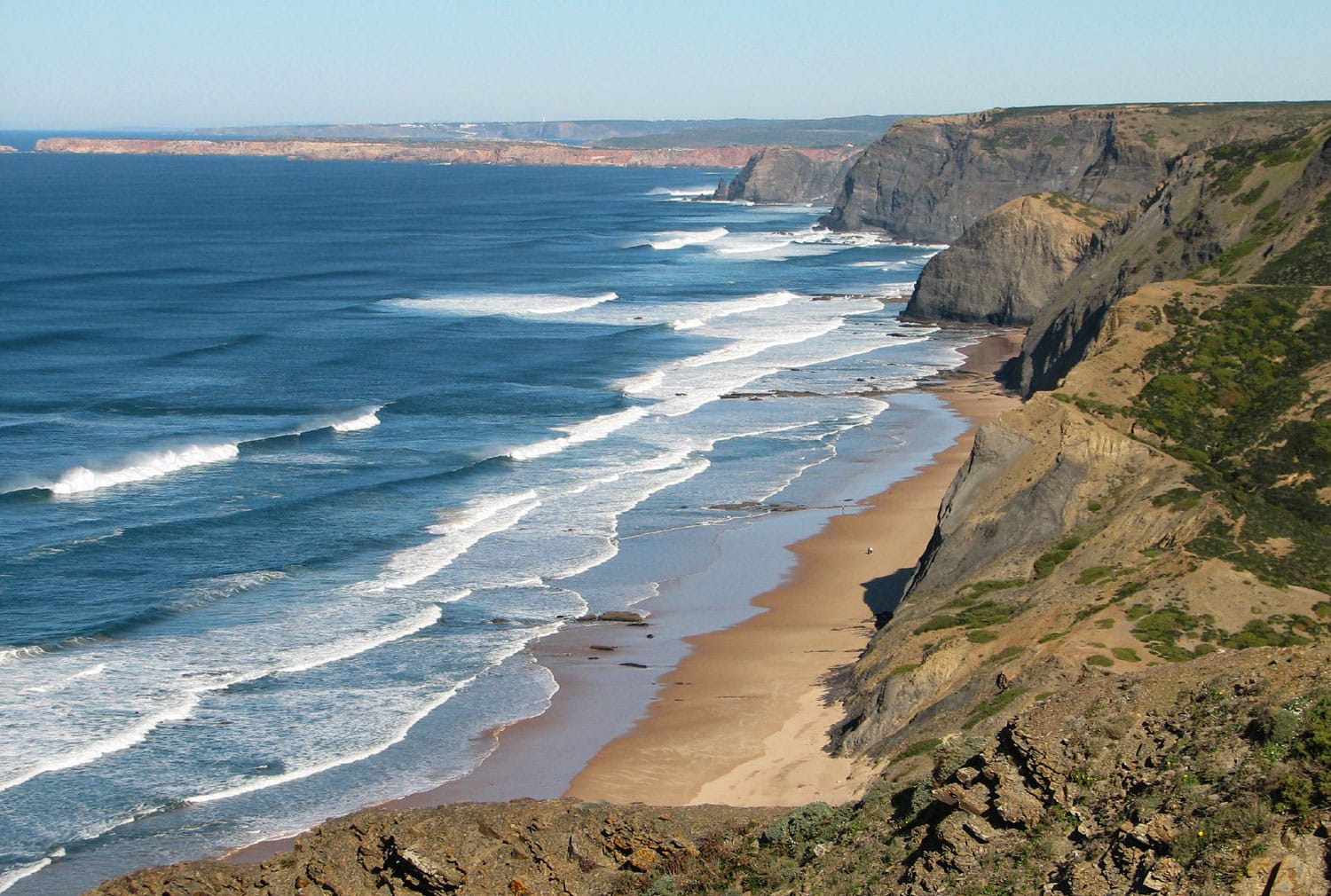
Castelejo is raw, wild Algarve at its best. Towering 156-meter cliffs—the tallest in the region—frame a beach that feels genuinely remote despite being accessible by road.
What makes it special:
- Reliable beach break with consistent waves
- Stunning cliff scenery and sea stacks
- Connects to Cordoama beach at low tide
- Less crowded than Amado or Arrifana
- Incredible sunset location
Best for:
Intermediate surfers
Local tip:
Be aware of rocks in the water, especially at lower tides. The cliff provides afternoon shade—great in summer, cold in winter.
Facilities:
Restaurant/bar, parking, no surf rental on site
6. Praia da Cordoama — Long Beach, Multiple Peaks
Location:
Adjacent to Castelejo, 12km from Sagres
Cordoama is a seemingly endless stretch of sand offering multiple peaks and plenty of room to spread out. When Amado and Arrifana are crowded, Cordoama often has empty waves.
What makes it special:
- Long beach with multiple surf zones
- Less crowded than famous breaks
- Beautiful dune-backed setting
- Blue Flag certified water quality
- Good for escaping crowds
Best for:
All levels, depending on which peak you choose
Local tip:
Rocks are scattered throughout—observe where waves are breaking before choosing your spot. The walk from the parking area is longer than it looks.
Facilities:
Limited—bring water and snacks
7. Praia de Monte Clerigo — Family-Friendly Option
Location:
5km west of Aljezur town
Monte Clerigo combines reliable surf with the convenience of a proper village. Restaurants, cafes, and accommodation are steps from the sand, making it ideal for families or those who want amenities nearby.
What makes it special:
- Sheltered bay with gentler waves than exposed breaks
- Village with restaurants and facilities
- Good option when west coast is too big
- Easier access than remote beaches
- Lifeguards in summer
Best for:
Beginners and families
Local tip:
The beach is smaller than others and can get busy in summer. Morning sessions are quieter.
Facilities:
Restaurants, cafes, showers, parking, surf rental nearby
8. Meia Praia (Lagos) — South Coast Option
Location:
East of Lagos marina
For those staying in Lagos who don't want to drive to the west coast, Meia Praia offers occasional surf when conditions align. It's not consistent, but when a south swell hits, this 4km-long beach can deliver fun waves close to town.
What makes it special:
- Walking/cycling distance from Lagos
- Rare south coast surf option
- Mellow waves when it works
- Good facilities and restaurants
Best for:
Beginners when conditions work
Local tip:
Check forecasts for south or southwest swells. Most days are flat, but the occasional south swell brings beginner-friendly waves.
Facilities:
Full facilities including restaurants, showers, parking, water sports rentals
Book a lesson:
Lagos Group Surf Lessons — Convenient lessons for those staying in Lagos
While in Lagos, don't miss exploring the famous hidden beaches near Lagos on your non-surf days.
Best Time to Surf in the Algarve: Seasonal Guide
Timing your Algarve surf trip correctly can make the difference between perfect conditions and frustration. Here's what to expect throughout the year.
Summer (June - September) — Best for Beginners
Summer brings smaller, gentler swells that are perfect for learning. The waves are typically 2-4 feet—enough to ride, but forgiving enough to make mistakes.
- Wave size: 2-4ft (occasionally flat or small)
- Water temperature: 19-22°C
- Wetsuit: 3/2mm or spring suit
- Crowds: Busiest season, especially July-August
- Best for: Beginners and those wanting guaranteed warm weather
Autumn (September - November) — Prime Season
Autumn is when the Algarve shines. Summer crowds thin out, water is still warm from months of sun, and the first winter swells start arriving with perfect offshore winds.
- Wave size: 3-6ft, sometimes larger
- Water temperature: 18-21°C
- Wetsuit: 3/2mm
- Crowds: Moderate—locals and traveling surfers
- Best for: Intermediate to advanced surfers wanting quality conditions
Winter (December - February) — Advanced Surfers Only
Winter transforms the west coast into a serious wave environment. Powerful Atlantic storms send consistent, large swells that produce challenging conditions.
- Wave size: 5-12ft+, often powerful
- Water temperature: 15-17°C
- Wetsuit: 4/3mm with boots
- Crowds: Quiet—mostly local and dedicated surfers
- Best for: Experienced surfers comfortable in powerful waves
Spring (March - May) — Sweet Spot
Spring offers a balance—calming conditions after winter storms, warming weather, and enough swell for good waves without the summer crowds.
- Wave size: 3-6ft
- Water temperature: 16-19°C
- Wetsuit: 4/3mm early spring, 3/2mm late spring
- Crowds: Light to moderate
- Best for: Intermediate surfers looking to progress

Surf Schools and Lessons in the Algarve
Never surfed before? The Algarve has excellent surf schools with experienced instructors who can have most people standing on their first session.
What to Expect from a Surf Lesson
A typical lesson runs 2-3 hours and includes:
- Beach safety briefing — Understanding waves, currents, and how to stay safe
- All equipment — Soft-top board and wetsuit provided
- Land practice — Pop-up technique and basics on the sand
- In-water instruction — Hands-on help catching and riding waves
- Maximum group size — Usually 6-8 students per instructor
Most people stand up and ride whitewater waves by the end of their first lesson. Expect to be exhausted—surfing uses muscles you didn't know you had.
Surf Schools by Area
Aljezur/Arrifana Area:
Perfect location for beginners with access to Arrifana and Monte Clerigo beaches.
Carrapateira/Amado Area:
The most consistent waves make this ideal for guaranteeing rideable conditions during lessons.
Lagos Area:
Convenient for those based in Lagos, with transport to the best beaches that day.
Albufeira/Central Algarve:
Lessons available with transport to west coast beaches.
Vilamoura/Eastern Algarve:
Surf lessons at Falésia Beach for those staying in the east.
Browse All Algarve Surf Experiences
Surf Lesson Pricing
- Group lesson (2-3 hours): €35-55
- Private lesson: €70-120
- Multi-day packages: Better value for 3+ days
- Equipment rental only: €20-30/day (board + wetsuit)
Essential Tips for Surfing in the Algarve
What to Bring
- Reef-safe sunscreen — The Portuguese sun is strong, even on cloudy days
- Wetsuit — Rent or bring your own (3/2mm summer, 4/3mm winter)
- Water shoes — Some spots have rocky entries
- Ear plugs — Prevent surfer's ear over time
- Water and snacks — Remote beaches have no facilities
- Towel and change of clothes — No changing rooms at most beaches
Safety Considerations
Rip currents are common on west coast beaches. If caught in one:
- Don't panic or fight against it
- Swim parallel to the beach until free
- Then swim back to shore at an angle
Other safety notes:
- Never surf alone at remote beaches
- Check conditions before entering—waves can be bigger than they look
- Respect your limits, especially in winter
- Some beaches have hidden rocks—ask locals or observe before surfing
- Summer brings lifeguards; winter does not
Surf Etiquette
The Algarve lineup is generally friendly, but following basic etiquette keeps everyone safe and happy:
- Don't drop in — The surfer closest to the breaking part of the wave has priority
- Don't snake — Paddling around someone to get priority is poor form
- Paddle wide — Go around the breaking zone, not through it
- Respect locals — They surf here every day; give them space and respect
- Apologize for mistakes — Everyone drops in accidentally sometimes; a quick apology goes a long way
Getting to Algarve Surf Beaches
From Lagos
Lagos is the most popular base for surf trips, with good access to all west coast breaks:
- Sagres (Tonel, Beliche): 30 minutes
- Amado: 35 minutes
- Carrapateira: 35 minutes
- Castelejo/Cordoama: 30 minutes
- Arrifana: 40 minutes
From Faro Airport
- Lagos: 1 hour
- Sagres: 1.5 hours
- Aljezur: 1.5 hours
Transport Options
Rental car is essential for serious surf trips. The west coast beaches have no public transport, and having a car lets you chase the best conditions each day.
Some surf schools offer pickup from Lagos, Albufeira, or other tourist areas—check when booking.
If you're based in Lagos, combine a surf session with exploring the region on one of the best day trips from Lagos.
Surf Camps and Multi-Day Experiences
For a full immersion experience, surf camps combine accommodation, daily lessons, and the surf lifestyle into package deals.
Typical surf camp package includes:
- 5-7 nights accommodation
- Daily surf lessons (usually 2 sessions per day)
- All equipment
- Transport to beaches
- Surf video analysis
- Yoga sessions (at some camps)
Price range: €400-800 per week depending on accommodation level and season
Popular surf camp areas include Sagres, Aljezur, and Carrapateira. Book well in advance for summer.
Beyond Surfing: Other Water Activities
The Algarve coastline offers more than just surfing. On flat days or for non-surfing companions, consider:
Kayaking to sea caves — Explore the famous Benagil Cave and other coastal formations by kayak
Dolphin watching — Spot wild dolphins along the coast with our complete dolphin watching guide
Coastal hiking — The best hiking trails in the Algarve include clifftop walks with views over the surf breaks
Hidden beaches — Discover the secret beaches near Lagos that most tourists never find
Frequently Asked Questions
Is the Algarve good for beginner surfers?
Yes, the Algarve is excellent for beginners, especially during summer (June-September). Beaches like Arrifana and Amado have gentle, forgiving waves and sandy bottoms perfect for learning. Multiple surf schools operate throughout the region with experienced instructors who specialize in teaching first-timers.
What is the best beach for surfing in the Algarve?
Praia do Amado is considered the most consistent overall, working in almost every condition. For beginners, Praia de Arrifana offers the gentlest summer waves and the best surf school infrastructure. Advanced surfers seeking powerful waves should head to Praia do Beliche near Sagres.
When is the best time to surf in the Algarve?
For beginners: June to September offers smaller, gentler waves ideal for learning. For intermediate to advanced surfers: September to November provides the best balance of quality waves and pleasant weather. Winter (December-February) brings powerful swells suitable only for experienced surfers.
Do I need a wetsuit to surf in the Algarve?
Yes, a wetsuit is recommended year-round. Water temperatures range from 15-17°C in winter to 19-22°C in summer. A 3/2mm wetsuit is sufficient for summer; upgrade to a 4/3mm with optional boots for winter. All surf schools provide wetsuits with lessons.
How much do surf lessons cost in the Algarve?
Group surf lessons typically cost €35-55 for a 2-3 hour session, including equipment. Private lessons range from €70-120. Multi-day packages offer better value—expect discounts of 10-20% when booking 3+ days.
Can I rent surf equipment in the Algarve?
Yes, surf equipment rentals are widely available. Board and wetsuit rental costs €20-30 per day. Surf shops in Sagres, Lagos, and Aljezur have good selections, and beaches like Amado have rental facilities directly on the sand.
Is the west coast or south coast better for surfing?
The west coast (Costa Vicentina) is the primary surf destination with consistent Atlantic swells and the best variety of waves. The south coast is generally too sheltered for quality surf, with the Sagres peninsula being the exception—it catches both west and south swells.
Are the Algarve surf beaches crowded?
Popular beaches like Arrifana and Amado can get crowded in summer, particularly with surf schools in the morning. For fewer crowds, visit during shoulder seasons (April-May, September-November), choose lesser-known spots like Cordoama, or surf early morning before lessons begin.
Ready to Catch Your First Wave?
The Algarve offers everything a surfer could want—consistent waves, stunning scenery, warm weather, and a welcoming surf culture. Whether you're paddling out for the first time or searching for empty peaks, this corner of Portugal delivers.
Start with a lesson at one of the beginner-friendly beaches, feel the thrill of riding your first wave, and you'll understand why so many surfers keep coming back to these waters year after year.
The west coast is calling. Grab a board and answer it.